
The story behind the story
The War of the Worlds
"No one would have believed, in the last years of the nineteenth century…"
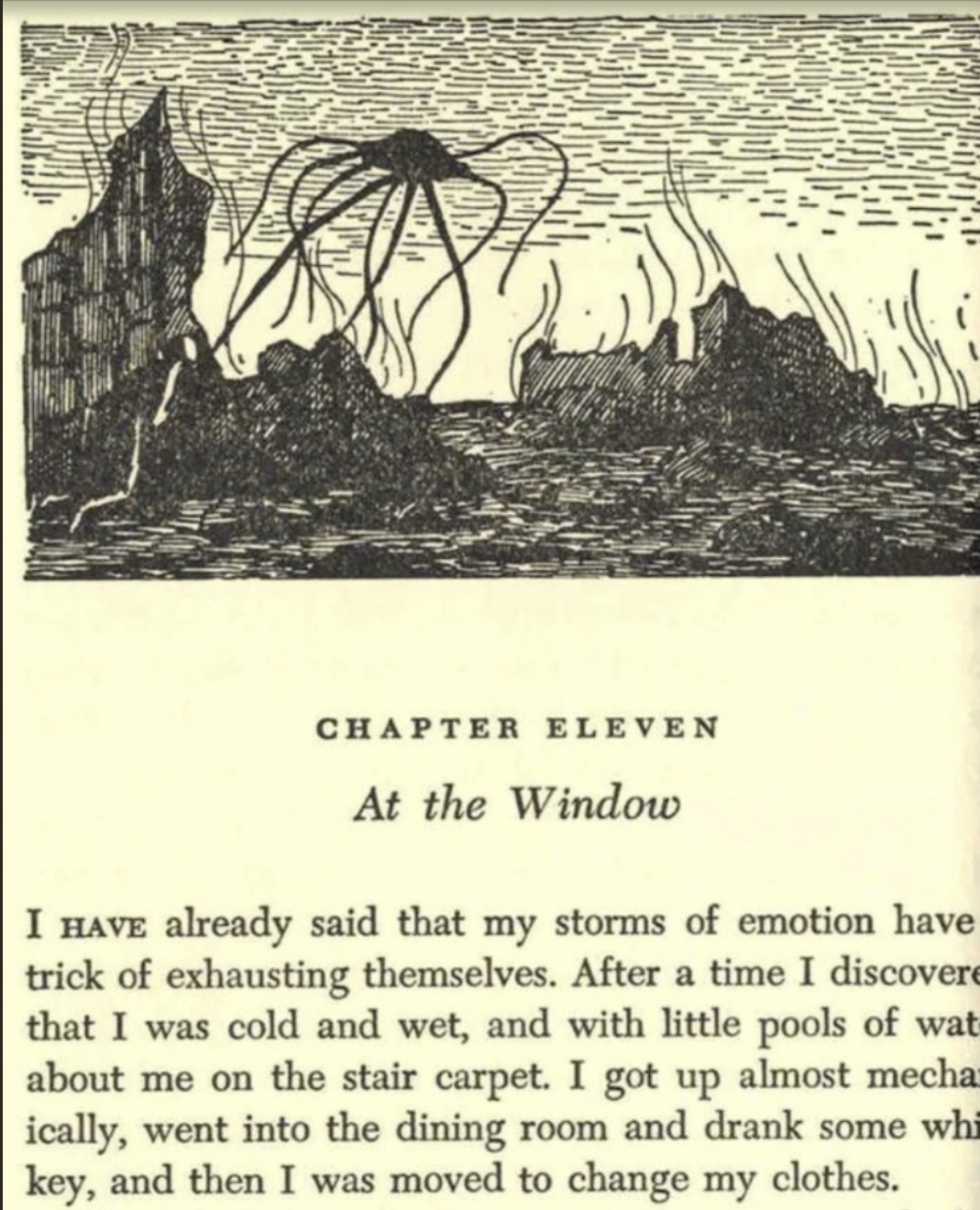
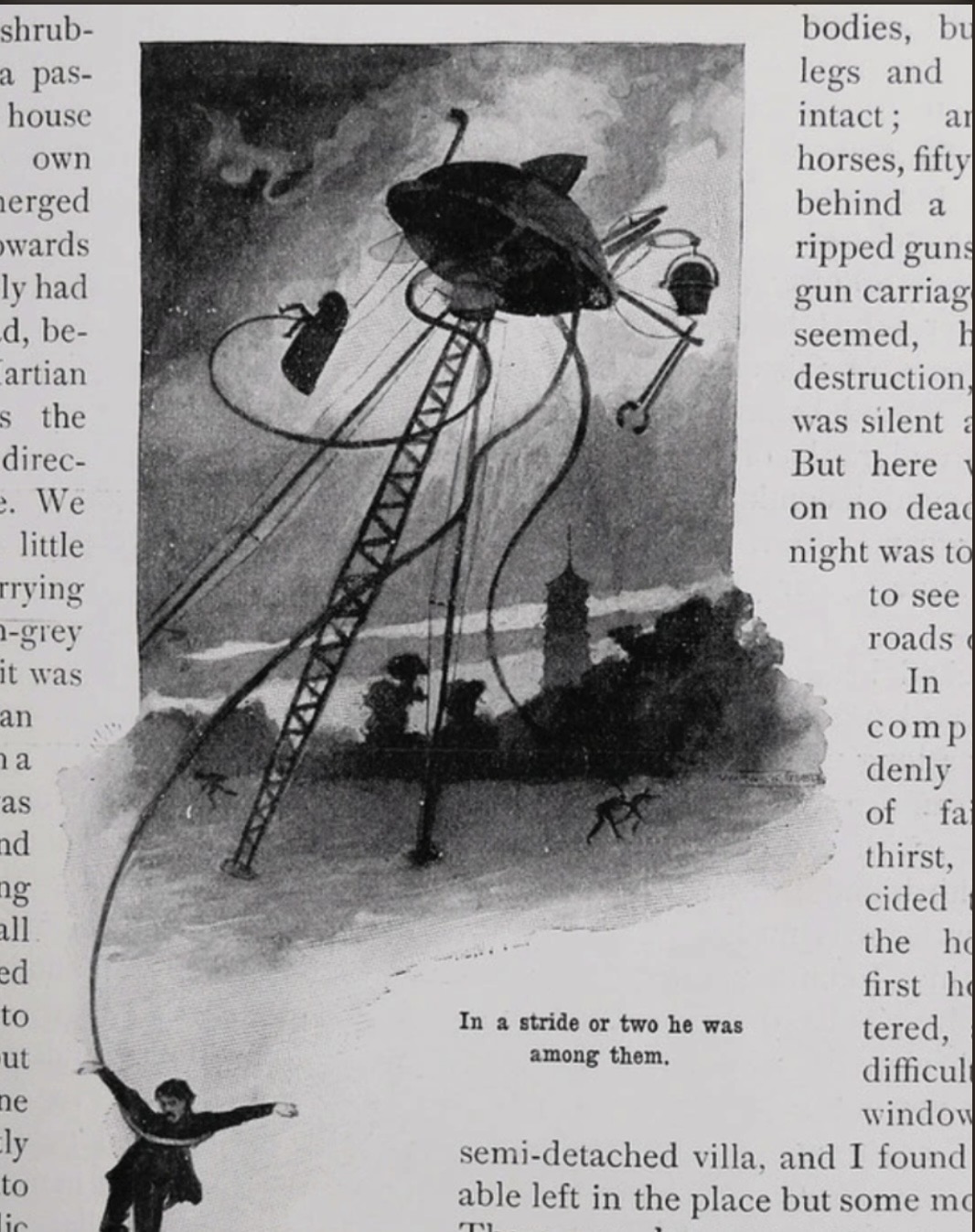
In 1898, H.G. Wells published The War of the Worlds — a novel that invented modern science fiction and introduced a chilling idea: humanity, at the height of its empire, could be casually swept aside by something older and vastly more intelligent. The tripods. The heat-ray. The red weed. A vision so vivid it has haunted every alien invasion story since.
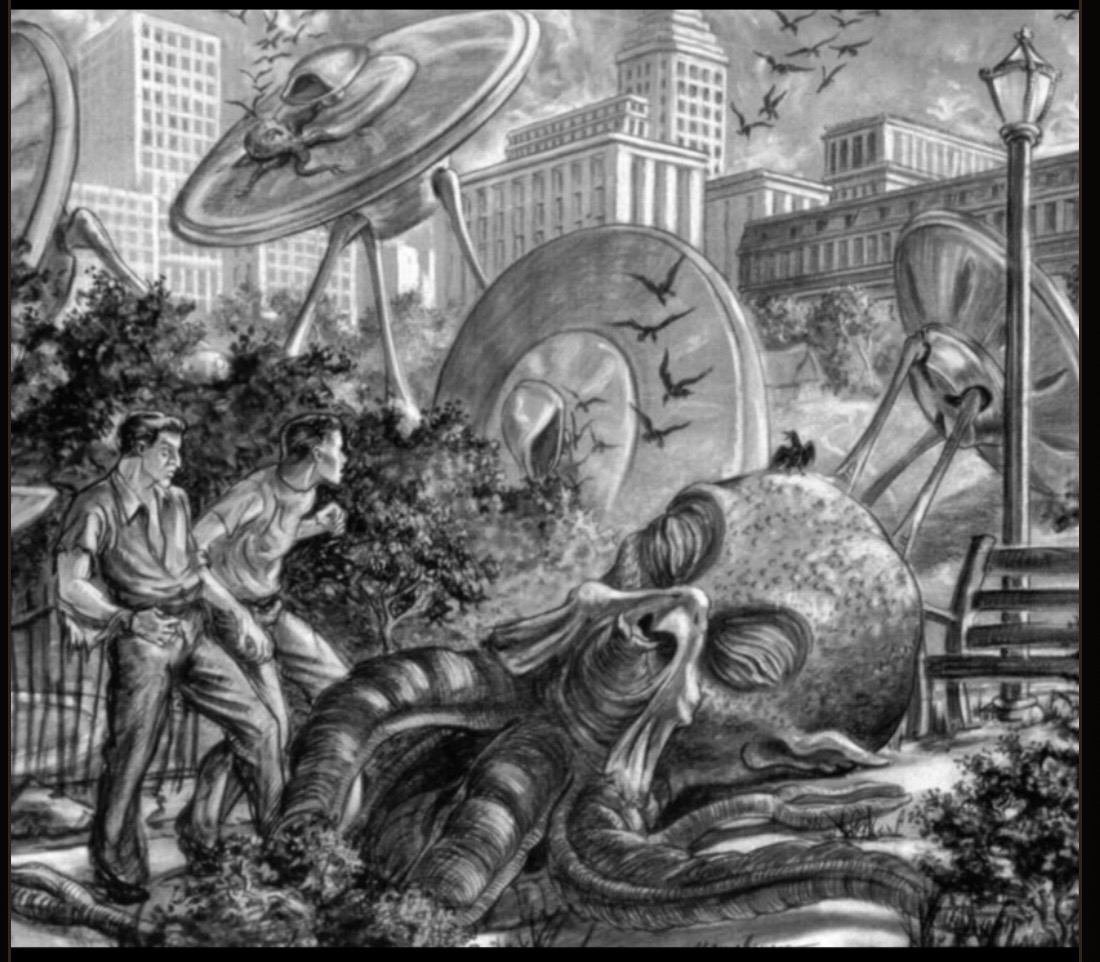
Forty years later, on Halloween eve 1938, a 23-year-old Orson Welles broadcast a radio adaptation on CBS. He set it in Grover's Mill, New Jersey — a real village he chose almost at random from a road map. Listeners tuning in late thought it was breaking news. Grover's Mill became, overnight, the most famous fictional epicenter of an alien landing in history.
A monument still stands there today, in Van Nest Park, commemorating the panic Welles caused with nothing but a microphone and imagination.
H.G. Wells publishes The War of the Worlds — the birth of modern sci-fi.
Orson Welles panics America with a radio drama set in Grover's Mill, NJ.
Timothy E. Burke's Grover's Mill — a cinematic reimagining, made independently.
Our film
Grover's Mill is not another remake of the invasion. It's a love story unfolding inside the invasion — grounded, human, and shot in the exact spirit of the original: with more imagination than budget. The film honors the source material's fear and grandeur, while asking a smaller, sharper question:
"When love is the only thing left on earth, what is it worth?"